
How it works, end to end
The short version is on the main page. This is the longer one: what happens in what order, what sits on your site, and the two things worth knowing before you commit rather than after.
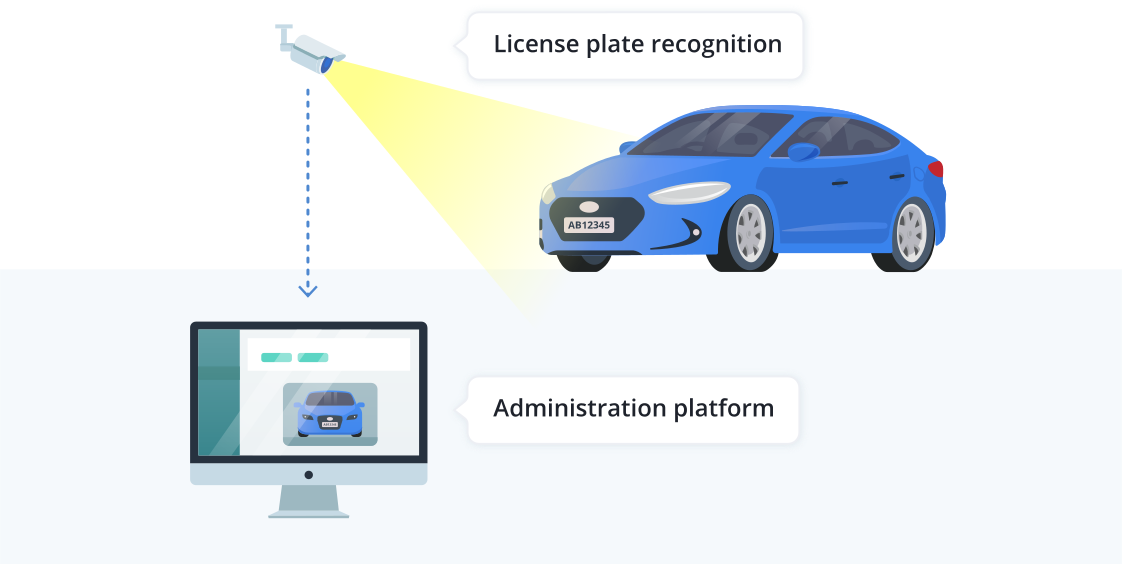
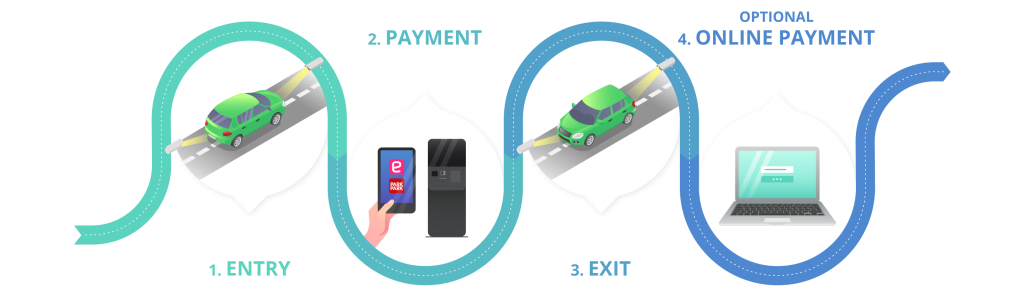
The order of events, and why it matters
Ordinary free flow settles payment on the way out. Everything between arrival and departure runs on trust, and a driver who never pays is discovered long after they have gone.
Smart Enforcement moves the commitment to the beginning. Shortly after arriving, the driver commits to payment — the amount is reserved, not taken. The final fee is still calculated on exit from the time actually parked, so nobody is overcharged for leaving early. What changes is that from a few minutes after arrival onward, there is a definite answer to the only question that matters when an officer is standing next to the car.
The gap between the grace period ending and the driver committing is the violation window. That window is recorded rather than written off, which is what turns enforcement from a deterrent into recovered revenue.
What sits on your site
ANPR cameras at the entry and exit points
One read on the way in, one on the way out. Where a plate is dirty, angled or otherwise likely to be misread, a second and heavier recognition model re-checks that scan before it is acted on, so the exceptions get the extra processing and the routine reads do not pay for it.
Somewhere to commit to payment
A payment machine on site, a virtual kiosk the driver opens on their phone, or a supported parking app. Most sites use more than one, because the driver who will not install an app is the same driver who complains loudest about a fine.
Signage that states the terms
The grace period, the tariff and the consequence of not paying. This is the part that makes enforcement defensible, and it is the part most often done badly.
Someone to walk the site
Smart Enforcement makes an officer effective; it does not replace one. If nobody ever visits the car park, the violations are still recorded but nothing is issued against them.
What the officer actually does
The officer scans a plate and is told where that vehicle stands right now: in grace, covered by a permit or a discount, committed to payment, or in violation. That answer comes from the live session, not from a list printed at the start of the shift.
Two practical points. The statuses are delivered to officer devices through an endpoint that returns plate and status — getting that list onto your officers' devices is set up on your side, alongside whatever handheld or app your enforcement team already uses. And if an officer issues a physical ticket, that ticket is not relayed back into Simplyture. We record the violation; the notice itself lives in your enforcement process.
Neither is a problem in practice — enforcement teams already run their own ticketing — but both are better known now than discovered in week three.
The cases people ask about
A driver commits late
They are covered from that point on. The unpaid window before it stays on the record, and a discount applied later does not cover it — a discount only counts from the moment it is applied.
A permit holder overstays
They are billed for the excess, not treated as an evader. Contract and season-ticket overruns are a billing matter and never become violations.
The session costs nothing
Free periods and zero totals release the reservation. Nothing is captured and nothing is retained.
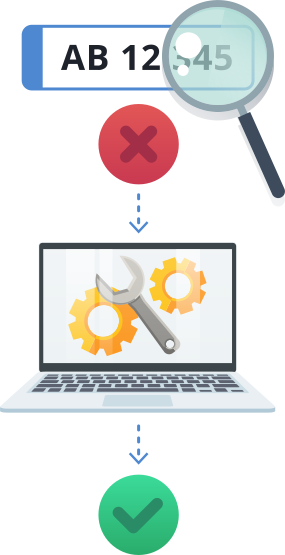
The plate is hard to read
Uncertain scans are re-checked by the heavier recognition model before they are treated as fact, which is what keeps a misread from becoming a wrongly issued charge.
Tell us how your site runs today
Barriers or not, officers or not, and what you think you are losing. That is enough for us to say whether this fits.